
The foreman’s walk-round, the logic behind the load, the things that quietly cost an hour — explained by the people who do it for a living.

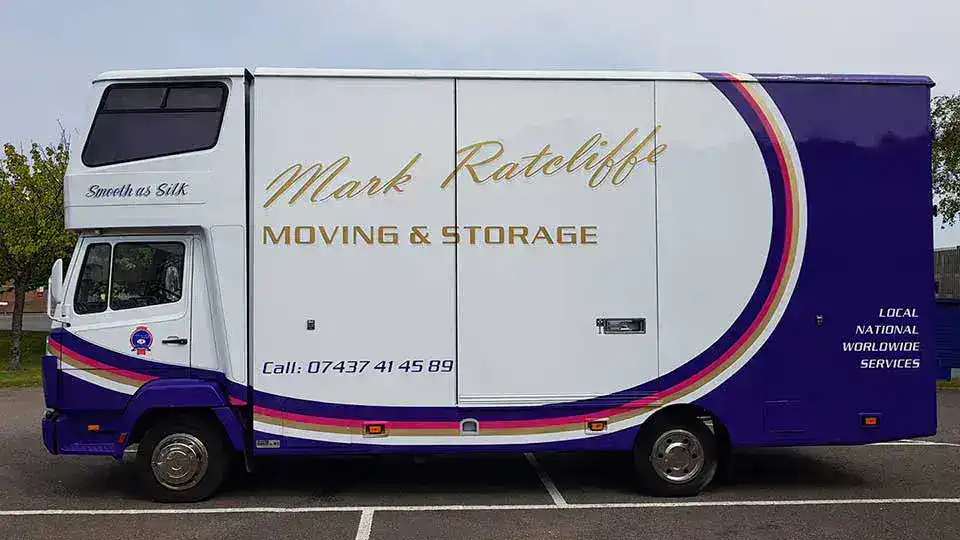
What do removal men do all day? Most people watch a removal crew for eight hours and still could not say what any of them were deciding. From the outside it looks like carrying. From the inside it is a foreman running a plan he built in the first fifteen minutes, three or four people executing a load order that was set before the first blanket came off the lorry, and a running mental tally of what will fit, what will bruise and what will need a second pair of hands on the stairs at the other end.
This page is written from the crew’s side of the day rather than the customer’s. If you want the hour-by-hour version — what time we arrive, when keys change hands, when the lorry pulls away — read our moving day step-by-step timeline instead. What follows here is the trade view: what a foreman is looking at, why the order things go into a lorry is not arbitrary, what a crew genuinely needs from you, and the difference between a house that is ready and a house that only looks ready.
None of this is a complaint sheet. It is the honest answer to a question customers ask us on nearly every job — “is there anything I can do to help?” — and the answer is yes, but almost never the things people assume.
Every crew that leaves our Lower Dicker depot has one named foreman, and he carries the job. He is not the oldest or the biggest man on the van. He is the one who has been trusted with load planning, with the inventory paperwork, and with the judgement calls that cost money if they go wrong — whether a wardrobe comes apart, whether a sideboard goes up a staircase or through a window, whether the lorry can sit where the customer thinks it can.
The foreman also owns the relationship for the day. He is the person who tells you the sofa will not fit through the new front door, which is a conversation nobody enjoys, and he is the person who decides whether the crew pushes on through lunch to beat a completion deadline. On our jobs the foreman is directly employed and trained in-house, which matters more than it sounds: a casual agency hand hired that morning has no reason to care what your dining table looks like in six months, and no authority to make a call when the plan meets reality.
Underneath the foreman a typical three-bedroom crew is three or four people, and they specialise without being told to. One tends to stay in the lorry building the load. One works the wrap station. The others run the carry. Nobody announces these roles — they settle within the first half hour, based on who is best at what, and a crew that has worked together for a while will barely speak for long stretches because everyone already knows where the next piece is going.
If your move is large, overseas, or full of things that cannot be replaced, Mark surveys it personally and the load plan is discussed before the day rather than invented on the driveway. That is the whole point of the pre-move survey: it moves the hard decisions off the doorstep and into a conversation where there is time to think.
The walk-round looks like a polite tour of your house. It is actually a survey being cross-checked against the quote, and the foreman is building four separate pictures at once.
The first is volume. He is comparing what is in front of him against the cubic footage the job was priced on. A quote written for a three-bedroom house does not survive a loft full of boxes nobody mentioned, and he would far rather find that at 8am than at 2pm with a full lorry and a garage still to do. If the volume has grown he will say so immediately, because the options at that hour — a second trip, a second vehicle, leaving items behind — all need your decision, not his.
The second is access, at both ends. Where can the lorry legally and physically stand? How far is the carry from tailgate to front door? Are there steps, a gravel drive, a shared entryway, a lift with a booking window, a bend in the staircase? Carry distance is the single most underestimated cost in the trade. Twenty extra metres, repeated across three hundred journeys in a day, is real hours.
The third is the awkward items. Every house has three or four: the piano, the American fridge, the eight-foot mirror, the glass-topped table, the grandfather clock, the wardrobe that was assembled inside the room and cannot leave it intact. The foreman finds these deliberately and decides on the spot whether they get pad-wrapped and blanket-strapped, crated, dismantled, or handled by a specialist team — some pieces belong with our piano moving or antiques moving crews rather than a general removal.
The fourth is the exceptions: what is not going, what is going in your car, what is fragile, what is irreplaceable. This is why he asks you to point at things and say the words out loud. A crew works fast and a fast crew loads what is in front of it. The unmarked box of paperwork you meant to keep with you will be on the lorry within the hour unless somebody says so.
Then the kit comes off the vehicle — blankets, webbing, tape, dollies, corner board, wardrobe cartons, floor runners, door guards — and the wrap station goes up in whichever room has the most furniture in it. From that point the house belongs to the crew.
A removal lorry is not filled the way a car boot is filled. It is built, in tiers, from the front bulkhead backwards, and the man in the vehicle is doing the hardest thinking on the job.
The rules he is working to are simple to state and hard to execute. Heavy and square goes low and forward — washing machines, chests, filing cabinets, the base tier that everything else rests against. Long flat items go vertical against the walls, so table tops, headboards, mirrors and glass ride on edge rather than flat, because a flat panel with weight on it will bow and eventually crack. Soft goods fill the voids: mattresses, sofa cushions, bagged bedding, all of which are doing structural work as packing, not just travelling. Cartons stack in even columns with the heavy book boxes at the bottom and anything marked fragile in the top tier where nothing can press on it. Odd shapes — lamps, bikes, garden tools, the hoover — go last into the gaps, and every four or five feet the whole face of the load gets strapped back to the vehicle’s side rails.
The reason for all of it is that a lorry corners, brakes and hits potholes. A load that is not tight will shift, and a load that shifts damages itself from the inside. Almost every transit-damage claim in this trade traces back to a void that was left in the load rather than to anyone dropping anything.
Layered over the physics is sequence. Whatever goes on last comes off first, so the foreman deliberately loads the things you will want immediately — the beds, the kettle box, the children’s things, the first-night carton — at the tail. If the move is going to a two-property day, or part of the load is going into storage at our Sussex depot, the lorry is effectively loaded in two zones so that nothing has to be unstacked at the wrong address. That planning is done in the first hour and it is why a foreman will politely decline when a customer asks for something to be taken out to the van early.
Watch a good crew and you will notice the lorry rarely goes quiet. There is a rhythm — wrap, carry, place, strap — and the man in the vehicle is always one piece ahead of the men on the path, calling for the next item he needs to complete a tier. Breaking that rhythm is what costs time, which brings us to the next part.
The list is shorter than most people expect, and none of it involves lifting.
Label the rooms, not the contents. A box marked “kitchen bits and pieces” tells a crew nothing they can act on. A box marked BACK BEDROOM in large letters on two sides tells them exactly where it lands at the other end, which saves you moving it yourself next week. Write the destination room, and write it on the sides rather than the top, because once a box is in a stack the top is invisible.
Be reachable and be decisive. The foreman will need you perhaps six or eight times across the day, usually for ten seconds — does this go, does this stay, which room, is this yours or the landlord’s. What slows a job is not the questions, it is waiting for an answer because somebody has gone out for milk. If you must leave, leave a phone number that will be answered and a named person on site who can make a call.
Sort the parking honestly. This is the single most useful thing a customer can do and the one most often left to chance. We need a legal, sensible standing place for a large vehicle as close to the door as possible — and if that means suspending bays, getting a permit from the council, or knocking on two neighbours’ doors the evening before and asking them to leave a gap, do it in advance. A lorry parked sixty metres away because a neighbour’s van is on the drive can add an hour and a half to a three-bedroom move, and nobody enjoys the conversation at 8am.
Clear the routes. Not the whole house — just the paths. Hallways, staircases, landings and the strip from the front door to the vehicle should be empty of anything the crew has to step over while carrying something heavy backwards. Bin bags by the door, shoes in the hall and a hoover at the bottom of the stairs are trip hazards to men who cannot see their feet.
Take charge of the things we should not touch. Passports, jewellery, medication, keys, laptops, the folder with the completion paperwork in it — those live in your car from the start of the day. Tell us what is happening with plants and with anything perishable from the freezer, and if you have pets, put them somewhere with a closed door. Front doors stand open all morning and a frightened cat will be out of the house within a minute.
Finally, tell us about anything unusual before the day rather than on it. A disconnected gas cooker, a bed frame that needs a specific tool, a tenancy check-out at 4pm, a neighbour dispute about the shared drive. None of these are problems if we know about them. All of them are problems at 11am.
Ask any foreman what costs him his afternoon and you will get the same handful of answers, and almost none of them are the ones customers worry about.
Packing that is not finished. This is far and away the biggest one. A crew arriving to a house where the kitchen cupboards are still full, the loft has not been touched and the shed has not been opened is a crew that now has to pack as well as load, in a house where the wrap station is competing for floor space with half-filled boxes. If you have booked a load-only job and you are not going to be finished, tell us a week out and we will bring a packing team the day before. That is a planned cost. Discovering it at 8am is an unplanned one.
Part-filled and badly filled boxes. A box that is half full collapses under the one above it, so it cannot be stacked, so it breaks the load pattern and eats volume. A book box filled to the brim with books weighs more than a man should carry repeatedly and slows every journey it is part of. Heavy items belong in small cartons and light bulky items in large ones — the opposite of what feels natural.
Supervision of the load. Well meant, and genuinely counterproductive. Standing in the lorry doorway to explain the order things should go in interrupts the one person on the job who is holding the whole three-dimensional plan in his head. Ask the foreman anything you like; just ask him on the path, not in the vehicle.
Undeclared items. A hot tub, a piano nobody mentioned, a shed full of paint tins, a garage of gym equipment, a loft still boarded and full. These do not simply add time — they can add a vehicle, and there may not be one available that day.
Access surprises at the far end. A first-floor flat with no lift when the quote assumed ground floor. A new-build with a doorway two inches narrower than the sofa. A gated development where nobody has the code. The old house is usually known; the new one often is not, which is why we ask you to send photographs of the destination if we have not surveyed it.
Waiting. Chains slip, and that is nobody’s fault, but a crew sitting on a kerb for two hours is a crew that will finish in the dark. Anything you can do to keep the solicitor moving on the day is worth more than any amount of help with boxes.
The flip side is worth saying too, because it is the part customers rarely hear. A house that is properly packed, clearly labelled, with a lorry-length of kerb free outside and one calm person on site who can answer a question, will move a full grade faster than the same house in a muddle. It is not about the crew going quicker. It is that nothing has to stop. On a job like that the men are finishing in daylight, the load has been built without compromises, and the pieces going into your new house have been handled once rather than three times. If something has gone wrong in transit, it also gets found and photographed against our goods-in-transit cover on the day, which is by some distance the easiest time to sort it out. And if you have booked the unpacking service, that saved time is what allows the crew to stay on and actually unpack rather than leaving a hallway of cartons behind them.
Yes, the tea thing is real, and no, it is not really about the tea. A crew doing physical work for eight hours will drink a lot, and an offer of a brew at nine and again at midday is read as a signal that the day is going to be a civil one. Leave the kettle, four mugs, milk and sugar out until last — the foreman will tell you when to pack them. Ask how everyone takes it once and write it on a bit of paper. It costs you nothing and it is remembered.
Toilets matter more than tea. Once your bathroom is packed down, or once the house is empty and the water is off, the crew has nowhere to go and the nearest option may be a fifteen-minute round trip. Keep one loo working with soap and a roll of paper until the lorry is loaded. If your move runs across a long day, tell the foreman where the nearest public facilities and a food stop are — local knowledge saves a lot of driving around.
Parking, again, because it deserves saying twice. Our vehicles are large and long, and where they can stand determines the shape of the whole day. If you live on a red route, in a controlled parking zone, on a narrow terraced street, in a block with a barrier, or at the end of a shared unadopted lane, deal with it before the day. Councils issue dispensations for removals and most will do it online with a few days’ notice. Cones borrowed from a friendly neighbour work too. What does not work is hoping.
Floors and doorways are the other quiet cost. We bring runners and door guards and we use them, but if your new house has just been re-carpeted or has a polished timber floor, say so early so the crew can lay protection before the first item comes in rather than after. The same goes for freshly painted staircases and newly fitted kitchens.
And one small kindness that helps enormously: leave the heating or the fan on appropriately for the weather. In February a house with the gas already off is bitter, and cold hands are slow hands. In July an unventilated loft clearance is genuinely dangerous, and the crew will need to pace it. Neither is a complaint. Both change how long the job takes, which is worth knowing when you are watching the clock against a completion time. Our moving day survival kit list covers the customer side of the same problem.
Crews form a view of a house within about ninety seconds of walking into it, and the tells are consistent.
A well-prepared house has closed, taped, labelled boxes stacked in one place per room rather than scattered. Wardrobes and drawers are empty or explicitly flagged as travelling full. Beds are stripped, or the foreman is told they are not. The loft ladder is down and the loft is empty. The shed and garage are cleared out and the contents are inside the house or in an agreed pile. Anything not going has been separated into one room with the door shut and a note on it. There is a working kettle, a working loo, a free front path and a car-length of kerb.
A badly prepared house is rarely a lazy one — it is almost always a house where somebody ran out of days. The signs are open boxes with the flaps still up, a kitchen with three cupboards done, a loft that has been “mostly” sorted, black bin bags mixed in among the cartons so nobody can tell rubbish from belongings, and a garage nobody has mentioned. The crew will still move you. But the load gets built with compromises, the finish time moves, and the risk of something being damaged or left behind goes up in a way that is nobody’s fault and everybody’s problem.
The honest advice from every foreman we employ is the same: if you are behind, say so early. Underdeclaring the state of the house to avoid an awkward conversation with the office never works, because the lorry has a finite size and the day has a finite length. Ringing us four days out to add a packing team or a second vehicle is cheap and easy. Discovering the need at eight in the morning on completion day is neither.
If you have never used a professional remover, here is the standard to hold us and anyone else to.
You should have had a survey — in person or by video — before anyone quoted you, and the quote should be written, itemised and fixed rather than an hourly guess. The crew should arrive in a liveried vehicle, in company clothing, with the foreman introducing himself and everyone else by name. There should be an inventory. Furniture should be pad-wrapped in your house before it moves, not shrink-wrapped on the pavement. Floors and door frames should be protected before anything heavy passes them. Nothing should be dragged.
You should be told, not asked to guess, what is happening: when the load will finish, what the plan is if the chain slips, who is driving, and when the vehicle will be at the new address. At the far end the crew should place furniture where you want it and unwrap it in the room rather than in the hallway, take the beds back up if they took them down, and walk the property with you before they leave. Empty cartons should be collected afterwards rather than left to you.
Underneath all of that there should be paperwork that means something: a real goods-in-transit and public liability position, a named legal entity, and in our case full British Association of Removers membership with an annual audit and the Advance Payment Guarantee protecting the 25% deposit you pay at booking. If a company cannot produce those, the day may still go fine — but you are carrying the risk, not them, and that is worth knowing before rather than after. Our guide to verifying a removal company covers exactly how to check each of those claims.
We've been a family-run Sussex remover — the same name on the lorry as the name on the paperwork. Mark personally surveys the high-value and overseas moves; our crews are directly employed (not casual day labour) and trained at our own staff training centre, one of only a handful of UK removers with that facility on site.
Standard inclusions on every full removal: pad-wrap protection for every freestanding piece of furniture, removal-grade cartons, a written and itemised fixed-price quote with no surprises on the day, and the British Association of Removers' Advance Payment Guarantee protecting every deposit. The result, over the years and hundreds of moves, is a 4.9/5 review average across 120+ independent Google reviews.
Booking the survey takes ten minutes. Whether it's a one-bedroom flat across Eastbourne or a country house to overseas, the process is the same: in-home or video survey, written quote within 48 hours, deposit-protected booking, and a calm move day.
Free in-home or video survey, written fixed-price quote, BAR-protected deposit. Sussex’s family-run independent remover.
A typical three-bedroom house gets a foreman plus two, sometimes three. Volume and access decide it, not just bedroom count — a compact house with a long carry can need more people than a bigger one with the lorry on the drive. The number is confirmed on your written quote after survey.
Yes, for standard items such as bed frames, table legs, wardrobe doors and flat-pack units that will not clear a doorway. The fixings travel bagged and taped to the piece, and the crew rebuilds them in the room at the other end. Fitted wardrobes and anything built in situ are a separate job — tell us at survey so it is planned.
Please do not. Insurance, technique and load rhythm all argue against it, and an untrained person on a staircase with a heavy item is where injuries happen. The genuinely useful help is labelling boxes by room, keeping the routes clear, sorting the parking and being on hand to answer quick questions.
No, and nobody will hint at one. Our crews are paid properly and never work for gratuities. If a team has done well and you want to mark it, a tip is welcome but a review naming the foreman is worth more to them — and tea, biscuits and a working loo are appreciated more than either.
Because the load is structural. Heavy square items go low and forward, flat panels ride on edge, soft goods fill voids so nothing can shift in transit, and fragile cartons sit in the top tier. Sequence matters too: whatever you need first at the new house is deliberately loaded last so it comes off first.
The foreman will tell you at the walk-round rather than at 2pm, because the options — a second trip, an extra vehicle, leaving items behind — are your decision and they need daylight. Undeclared lofts, sheds and garages are the usual cause, which is why an honest survey is worth the half hour it takes.