
Every carton on the van is a carton you pay to move. Here is how to decide what goes, where each pile actually ends up, and what no crew is allowed to load.

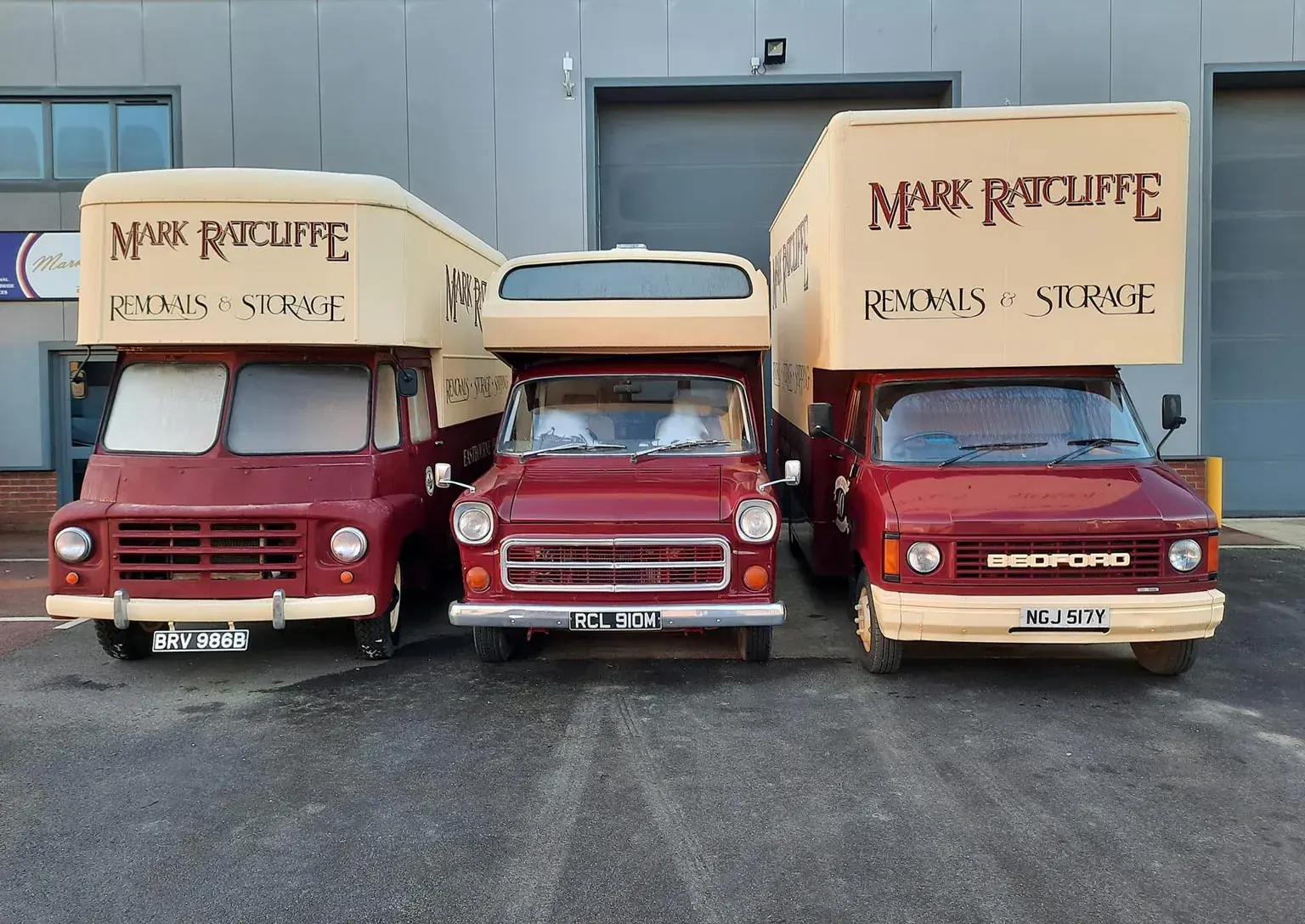
The single cheapest thing you can do is declutter before moving, because a removal is priced on volume and crew hours and nothing else. Every cubic foot on the van has a number attached to it, and a fair proportion of what we load out of a British house has not been opened since the last move. This guide is about disposal rather than tidying: deciding what genuinely should not travel, working out where each category actually goes, and knowing which items no removal crew is allowed to put on a lorry at all.
It is a different job from cleaning the house, and it needs its own slot in the calendar. If what you want is the room-by-room deep clean alongside the packing, that sits on our spring cleaning before moving house guide. What follows here is the sorting, the selling, the charity collections, the council bulky waste service, the tip runs, the list of things we legally cannot carry, and where all of that has to sit in the run-up so it does not collide with the packing. It comes from what we actually find in Sussex lofts and garages on survey.
A removal quote is built from two numbers: the volume of the load in cubic feet and the hours it takes a crew to handle it. That is why a surveyor walks round counting cartons by size rather than asking what your furniture is worth. It also means the arithmetic on any single item is straightforward — if a thing takes up space, it costs money to move, whether or not you ever use it again.
Three tests do most of the work. The replacement test. Would it cost less to buy this again at the other end than to move it, and would you actually buy it again? The classic failures here are flat-pack furniture that will not survive a second dismantle, garden furniture that has done five winters, a chest freezer, and any mattress over about eight years old. The twelve-month test. If it has not been used, worn or looked at in a year, and it is not seasonal, sentimental or genuinely valuable, it is going to sit in the new loft doing the same nothing. The access test. Anything currently in a loft, a garage, a shed or the back of a wardrobe is a candidate by definition, because that is where things go to be forgotten.
Where people get it wrong is at both ends of the scale. Small dense things — books, records, tools, tinned food, paperwork — are heavy and expensive per cubic foot, and there are usually far more of them than anyone estimates. Large light things — a wardrobe, a garden bench, an exercise bike, a broken parasol — eat van space out of all proportion to their value. Somewhere in the middle sits the stuff that genuinely should travel, and that is a smaller pile than most households expect on the first pass.
Run the numbers before you decide. Our moving and storage calculator converts a house into cubic feet and shows you what different volumes look like, which is a far more honest picture than walking round with a bin bag and good intentions. If the move is a downsize, the wider approach is set out in our downsizing guide, and the way volume feeds into a Sussex quote is broken down in our cost of moving house in Sussex guide.
Sorting into keep, sell, donate and dispose is the standard advice and it is right, but the reason it fails in practice is that three of those four piles need somebody else’s diary. A sold item needs a buyer to turn up. A donated item needs a collection slot. A disposed item needs a booked appointment at a household waste site or a bulky waste collection. Decide the pile and book the route in the same sitting, or you will find yourself on completion morning with four piles and only one of them gone.
Keep goes into cartons and gets counted at survey. Tell the surveyor honestly what is going, not what you hope will be going, because a quote built on an optimistic declutter and a load built on the real one is how a van runs out of space.
Sell needs the longest lead time of the four. Assume three weeks minimum for anything larger than a bag, and expect at least one no-show. Anything with genuine value — period furniture, silver, jewellery, art, a piano — should be seen by a local auction house or valuer rather than listed online, and that is a separate conversation with its own timescale. If it turns out to be worth moving after all, our antiques moving and piano moving teams handle it properly.
Donate is the most under-used route and the one with the most conditions attached, which the next section deals with. Dispose is the pile that has to be booked earliest and is always booked last.
Work through the house in the reverse of the order you will pack it: loft, garage, shed and outbuildings first, spare rooms next, daily-use rooms last. That way the disposal decisions are made in the weeks when there is still time to act on them, and the packing runs on afterwards against the 8-week preparation plan without tripping over piles on the landing.
Each of the three main disposal routes has rules that catch people out, and all three of them are easier to satisfy six weeks out than six days out.
Charity collection. Most large furniture charities and a lot of local hospice shops will collect sofas, armchairs, tables, beds and wardrobes free of charge, which is by far the best outcome for a bulky item in reasonable condition. The condition that stops it most often is the fire label: upholstered furniture must still carry its permanent fire-safety label, and no reputable charity can resell a sofa or mattress without one. Check before you book, because a crew that arrives and refuses the sofa leaves you with a sofa and no plan. Electrical items usually need to be safety-tested by the charity before resale, so many shops accept only recent, clean, working appliances. Collection slots in the weeks either side of a bank holiday fill up quickly.
Selling. Local marketplace listings move furniture fastest, at low prices, to people who may or may not arrive. Set a deadline — anything unsold by a fixed date joins the disposal pile automatically — and stick to it, because the alternative is negotiating over a wardrobe on completion morning. For collection-only listings, insist on a firm time and have someone in the house. Books, DVDs and games are rarely worth listing individually; a local charity shop takes the lot in one trip and the time saved is worth more than the pennies.
The tip. Sussex household waste recycling centres now largely run on booked slots, and vans, pickups and trailers need a permit as well as a booking because the sites are for household waste rather than trade waste. Book early in the process, not late, and check the site’s list before loading: plasterboard, tyres, asbestos and some garden chemicals are handled separately or not at all, and fridges, freezers and televisions go to a dedicated electrical area rather than the general skips. Two smaller booked runs are usually easier to get than one big one.
One thing to be clear about: a removal booking is not a skip. A removal moves household goods to another address, and the disposal pile is not part of it, so please do not plan on the crew taking rubbish away at the end of the day. Clearance is a separate job with separate paperwork — we quote it separately as house clearance — and whoever you use for it, check they are a registered waste carrier, because fly-tipped waste traces back to the householder who paid for it.
Every district council in Sussex runs a bulky household waste collection, and for anyone without a van it is the most practical way to get a three-piece suite off the premises. It is also the route with the longest and least predictable lead time, which is why it belongs in week one of your planning rather than week seven.
How it generally works. You book online, list the items individually, and pay per item or per collection depending on the district — there is no national scheme, so the price, the item limits and the accepted list all differ from one council to the next even between neighbouring towns. You are then given a date, and the date is often two to three weeks out and considerably further in spring and in the weeks before Christmas, which are the two peaks. Items have to be at the boundary of the property, accessible from the road, by early morning on the day — usually 7am — and crews will not come inside to fetch them. If you live in a flat, at the top of a private drive, or behind a gate, read the small print carefully before you pay.
What is usually accepted: sofas, armchairs, mattresses, bed frames, wardrobes, tables, carpets, garden furniture, barbecues. What is usually handled separately: fridges and freezers, which contain regulated refrigerant gases; televisions, monitors and anything else classed as electrical waste; and anything hazardous, which is almost never taken kerbside at all.
Two practical points. Book the collection for a date at least a fortnight before completion, not the day before, because a missed or rescheduled collection on completion morning becomes the buyer’s problem and then very quickly becomes yours again. And take a photograph of the items at the boundary on the morning — occasionally a collection is marked as failed because the crew could not identify what was theirs among a neighbour’s pile.
This is the part that surprises people on the morning, and it is not a matter of preference. A removal lorry is a road vehicle carrying goods for hire and reward, and there are things that cannot legally travel in one, things that void goods-in-transit cover, and things no sensible crew will load. Sorting them out is a disposal job, so it belongs in this plan rather than in the packing.
Flammable liquids and fuels. Petrol, diesel, two-stroke mix, paraffin, lighter fuel, methylated spirit, white spirit, turpentine, cellulose thinners, barbecue lighter fluid. That includes the jerrycan in the garage and the fuel left in a mower, strimmer or chainsaw — drain them and run them dry before move day.
Gas. Patio-heater bottles, barbecue bottles, camping cylinders, helium canisters, oxygen cylinders, and the small blue butane cartridges. Full or empty makes no difference. Bottles usually carry a returnable deposit, so take them back to a stockist rather than to the tip, and note that most household waste sites will not accept them at all.
Paint and household chemicals. Part-used tins of emulsion and gloss, wood preservative, creosote, brick acid, drain cleaner, bleach in bulk, pool and hot-tub chemicals, weedkiller, pesticide, fertiliser. Aerosols in any quantity travel badly in a hot lorry. Fireworks and ammunition are an outright no in every case.
Perishables and open liquids. Frozen and chilled food, anything opened, anything that can leak. A defrosting freezer or a split bottle of oil in a load is a genuinely expensive problem because of everything it lands on, which is also why we ask that freezers are emptied, defrosted and dry the day before.
Things we can carry but would rather you did not give us. Cash, jewellery, passports, share certificates, medical records, house deeds and irreplaceable documents are excluded from standard goods-in-transit cover — they belong in your car. The detail is in our terms and insurance details, and the same restricted list broadly applies to anything going into store, which is set out in what you can and cannot store.
Disposal routes for the banned list are specific. Paint goes to a household waste site’s paint bank, or is hardened off with a proprietary paint hardener or sand and then treated as ordinary waste once fully solid — never poured down a drain. Fuels, garden chemicals and pool chemicals go as hazardous household waste, which at most Sussex sites needs a separate booking. Gas bottles go back to the supplier. Car batteries, lithium battery packs and vapes go to dedicated collection points, never in a bin. Start this at week six; the appointments are the bottleneck.
Almost everything on the banned list, and most of the disposal pile, comes out of the same three places. Deal with them first and the rest of the house is straightforward.
The garage. The fuel can, the mower with half a tank in it, the gas bottle from the barbecue, the shelf of half-used paint, the car battery, the tin of brick acid, the aerosols. Also the heavy awkward things a crew needs to know about in advance rather than find on the day — a workbench, a safe, a motorcycle, a chest freezer, a set of weights. Those are movable, but they change the crew size and sometimes the equipment, which is exactly the sort of thing covered in our heavy and awkward items guide.
The shed. Weedkiller, slug pellets, lawn feed, creosote, a strimmer with two-stroke in it, and a decade of terracotta pots that nobody is going to move across a county. Garden chemicals in unlabelled containers are the worst case, because a site cannot accept a hazardous liquid it cannot identify; if you do not know what it is, ring the council’s waste team before you turn up with it.
The loft. Rarely dangerous, almost always the biggest volume in the house. Christmas decorations, suitcases inside suitcases, the children’s primary school work, boxes that came from the last move and were never opened. Two things matter here. Get it down early, because a loft emptied on the last weekend is a loft that gets loaded onto the van undecided. And be genuinely careful with the sentimental layer — it is worth a proper afternoon rather than a snap decision, and photographs and paperwork usually reduce to a fraction of their volume once sorted.
Sorting these three spaces early also gives the surveyor a truthful picture, which is the difference between a fixed quote that holds and a van that is the wrong size. If the loft or garage turns out to hold things you want but the new house has no room for yet, storage is often cheaper than a hasty decision — our Lower Dicker storage takes household loads by the week.
The most common mistake is not decluttering too little. It is decluttering at the same time as packing, in the last fortnight, when both jobs need the same floor and the same hours. Disposal has to finish before packing starts, because a disposal pile in a house being packed gets packed.
Weeks eight to six. Empty the loft, the garage and the shed. Make the four-pile decisions. Book the bulky waste collection and the household waste site slots now, while there is slack in the diary, and separate out everything on the banned list into one clearly marked corner nobody touches. Book the survey and tell the surveyor what is going.
Weeks six to four. List everything you are selling, with a hard deadline. Book the charity collections and check the fire labels before the van is booked rather than after. Take the hazardous items to their appointments. This is also the window in which to sell anything that needs a valuation.
Weeks four to two. The tip runs happen. Anything unsold moves automatically into the disposal pile without further debate. The bulky collection lands. By the end of week two you should be able to walk through the house and see only things that are travelling.
The last fortnight is packing and nothing else. No new decisions, no new tip runs, no marketplace collections. If something has not gone by then, put it in a carton and deal with it at the other end — paying to move one box is cheaper than losing a day in the week you need most. If the whole timeline is already tighter than this, the triage version is in our organising a move when you are busy guide, and the cleaning that follows the emptying is in the moving-out cleaning checklist.
Free in-home or video survey, written fixed-price quote, BAR-protected deposit. Sussex’s family-run independent remover.
Some houses cannot be decluttered by the person moving out of them, and it is worth saying so plainly rather than pretending willpower is the missing ingredient. A probate property where a whole life has to be dealt with by relatives who live three counties away. A downsize from a five-bedroom house into a two-bedroom flat, where two thirds of the contents cannot physically go. A move out of a home someone has been in for thirty years. A late completion date that leaves ten days rather than eight weeks.
In those situations the sensible order is inverted: identify and remove what is being kept, then clear the rest as a single job rather than sorting item by item. That is what a house clearance is for, and it is quoted separately from the removal because it is separate work with separate responsibilities. Anything of value is identified first and set aside — furniture, jewellery, paperwork, photographs — and the remainder is separated for reuse, recycling and disposal.
For a bereavement or a probate sale, one practical piece of advice above all others: do not throw away paperwork in the first pass. Deeds, share certificates, premium bond records, insurance policies, pension correspondence and old bank statements turn up in drawers and biscuit tins, and they are the documents an executor spends months looking for afterwards. Box every piece of paper, take the box with you, and go through it later.
If the move is a downsize into sheltered or supported accommodation, the volume question comes at it from the other direction: what will actually fit. Measuring the new rooms before deciding what to keep saves an enormous amount of grief, and our care home and supported living move guide covers how that is usually handled. Where the answer is “most of it, but not yet”, storing for a few months is often the kinder option than deciding under pressure.
Survey first, then declutter, then tell us what changed. That order works better than the other way round, because a surveyor who has seen the loft can tell you what it is costing you to keep it — and the cubic-foot figure attached to a specific pile of things is far more persuasive than any amount of good intention. We survey in home or by video, the visit takes 30–45 minutes for a typical three-bed, longer if there is a loft, a cellar and a full garage, and the surveyor photographs access, counts cartons by size and asks what is staying.
The written quote follows within 48 hours, itemised so you can see what each line covers. It is fixed rather than an hourly estimate, which is precisely why the declutter matters — a load that shrinks after survey is worth telling us about, and a load that quietly grows is how a van turns out to be too small on the morning. Twenty-five per cent of the quoted price is payable as a deposit on booking with the balance on completion, and that deposit is protected under the British Association of Removers’ Advance Payment Guarantee. We are a full BAR member, audited annually, and we hold 4.9 out of 5 across 120+ independent reviews.
On the day itself you get our own directly employed crew rather than agency labour, our own lorry, pad-wrap on every freestanding piece and removal-grade cartons. Domestic removals are VATable and the quote shows net and gross, so there is nothing to work out afterwards. The office is on 01323 848 008, Monday to Friday 8am to 5:30pm and Saturday 9am to 1pm, or you can start with the online quote form. Ask about anything on the banned list before move day rather than on it — we would far rather have the awkward conversation in advance. Whether the job is local across Eastbourne or an international removal, where restrictions on what can travel are tighter still, the principle is the same.
The honest summary, from a lot of surveys: nobody has ever told us afterwards that they threw away too much. Plenty of people tell us they paid to move things they then paid to store and eventually threw away anyway. Decide early, book the routes on the same day you decide, and keep the last fortnight clear for packing.
Petrol, diesel and any flammable liquid, gas bottles and camping cylinders full or empty, paint and household chemicals, weedkiller and pool chemicals, fireworks, ammunition, and perishable or open food and drink. Cash, jewellery and irreplaceable documents can travel but are excluded from cover, so keep them in your car.
Take them to a household waste site with a paint bank, or harden the contents off with a proprietary paint hardener or sand until fully solid and dispose of the tin as ordinary waste. Never pour paint down a drain or a sink.
At least three to four weeks, and further in spring or before Christmas. Book it to land a fortnight before completion rather than the day before, because a rescheduled collection on moving morning becomes a problem you cannot fix.
Almost always the missing fire-safety label. Upholstered furniture and mattresses cannot be resold without the permanent label attached, so check for it before you book a free collection.
A removal is priced on volume and crew hours, so anything large, low-value and easily replaced usually costs more to move than to buy again. Flat-pack furniture, old mattresses, tired garden furniture and chest freezers are the usual candidates.