
What actually changes when a load crosses a county line, waits for a container or needs a hoist — and what those customers told us mattered.

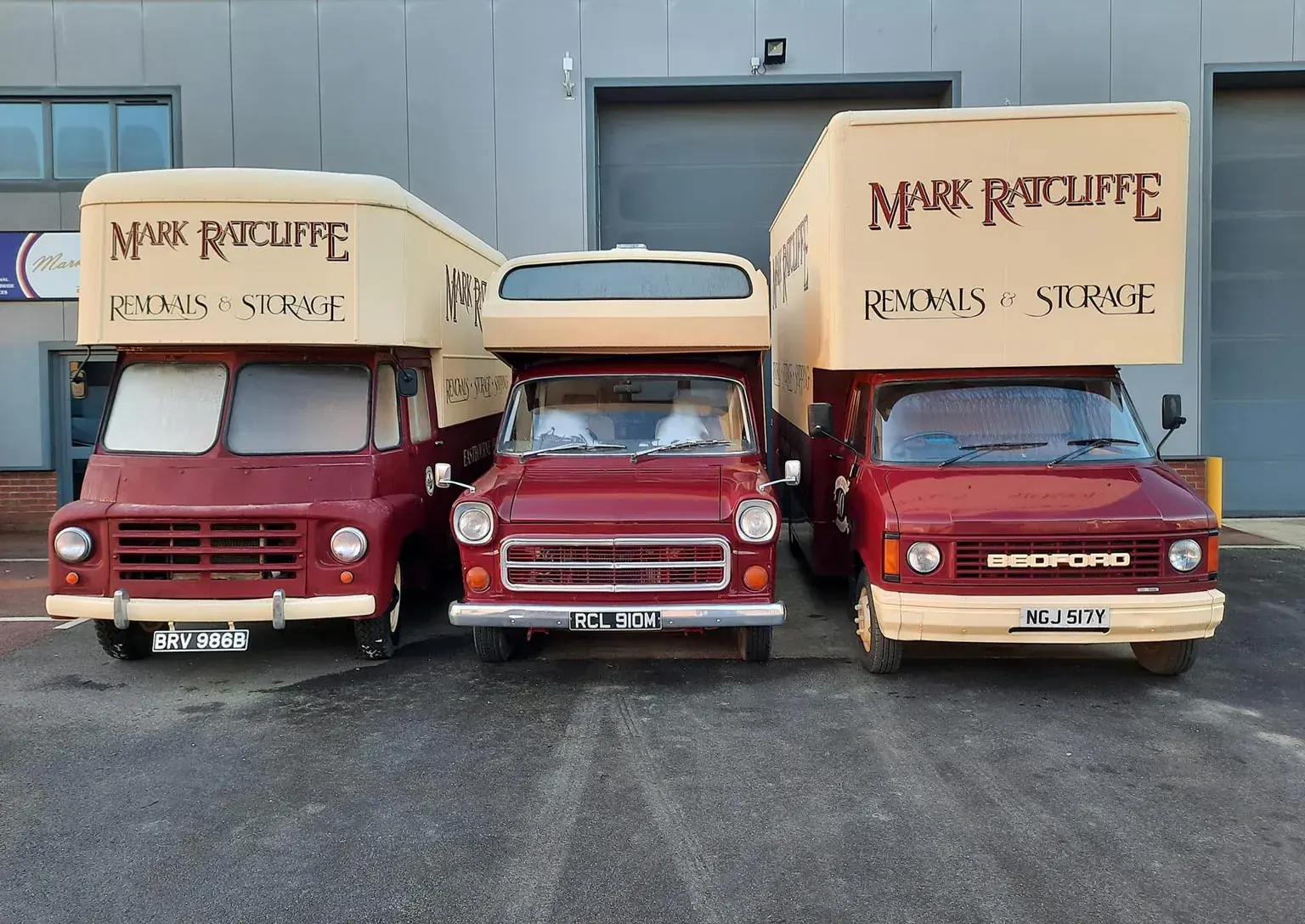
Most international removals reviews tell you a firm was “brilliant” without telling you what was actually difficult. This page does the opposite. It collects the jobs from our own move-day notebooks where distance, a border or an awkward load changed the shape of the work — and what those customers said mattered once it was over. A long-distance move experience is not a local move with more miles on it. The load leaves your sight for days or weeks rather than hours, the administration outweighs the lifting, and one missed date costs a sailing rather than an afternoon.
If you want the everyday picture as well — the ordinary Sussex jobs that go in by morning and out by afternoon — our collection of real customer moving stories covers those. What follows here is the long-haul, overseas and genuinely unusual end of the diary, anonymised where appropriate. The star ratings on our reviews page aggregate 120+ Google and Trustpilot entries, but a five-star average cannot show you what a container week actually involves.
A retired couple emigrating from Hastings to a coastal villa in southern Spain. The move had been planned for nine months, the customs paperwork was in hand, the FIDI-network partner in Spain was confirmed, and the container loading was booked for the Wednesday. Then on the Monday before, new EU import documentation requirements came into force that had not existed when the move was originally planned.
Our office team rebuilt the paperwork over 48 hours. The customer was kept informed but largely left out of the panic — most of the new documentation sat inside the shipping arrangement rather than with them, and they signed only what genuinely needed their signature at their end. The container loaded on time on the Wednesday, customs cleared in Spain on schedule, and the local Spanish partner delivered to the villa as planned.
This is the part of an overseas move nobody photographs. On a domestic job a document problem costs you a phone call. On an export job it costs you the vessel, because the container has a cut-off at the port and the next sailing is not tomorrow. That is why we treat international removals as 30% logistics and 70% paperwork, and why the office builds the export inventory, the valuation list and the customs declarations rather than handing a form to the customer and hoping. The removals to Spain service and the wider international removals service set out how the shipping, customs and delivery legs fit together.
The other thing distance changes is silence. Between the container leaving our Lower Dicker depot and the local partner unlocking it at the villa, weeks passed in which nothing visibly happened. We schedule contact points across that gap — loading confirmed, vessel sailed, arrival port, customs cleared, delivery booked — because an unexplained three-week silence is the most common complaint people have about overseas removers, and it is entirely avoidable.
The customer’s post-move call to the office thanked us specifically for “the bit nobody else does — the paperwork”. That is the line we would rather see in an international removals review than any compliment about the lifting. One practical note for anyone comparing quotes: international removals are zero-rated for UK VAT while domestic removals are not, so an overseas figure and a UK figure are not directly comparable line for line.
An older couple moving from a 5-bedroom country house to a 2-bedroom apartment at Sovereign Harbour, Eastbourne. The new apartment was about 40% of the volume of the old house. The contents had to either fit or go, and there was no fit-everything option.
Because the destination was twelve miles away, we did the thing that solves this cleanly: a survey at both properties, an inventory of what would and would not fit, and a multi-route disposal plan for the surplus. Some pieces went to family members, some to auction, some to charity. The remaining contents fitted the apartment with care. That job is worth describing here because it is the version of the problem we cannot solve that way when the destination is in another country.
On an overseas or long-haul job the destination survey is the one tool you lose. Nobody is driving to Alicante or Auckland for half an hour with a clipboard. So the fit question has to be answered on paper before anything is loaded: room dimensions and door widths supplied by the receiving agent or the customer’s solicitor, a video walk-through of the new property where one exists, a stair and lift note, and a room-by-room list of which large pieces are going where. Wardrobes, sofa beds, American fridges and anything over about two metres get measured against the actual opening rather than assumed.
The cost of skipping that step is unusually harsh at distance. A sofa that will not turn into a Sussex hallway goes back on the lorry and into store the same afternoon. A sofa that will not go into a Spanish apartment has already been paid for twice — once as shipped volume, once as disposal in a country where the customer has no van, no contacts and often no language. Our preparation guide covers the general timeline; for a move going abroad, start the fit conversation at the survey rather than in the last fortnight, and read the overseas removals guide alongside it.
A 5-property chain centred on a customer moving from Lewes to Brighton, scheduled for a Friday in May. The chain involved households in London, Lewes, Brighton, Hassocks and Burgess Hill, with five separate solicitors and four estate agents. By 11am it was running 90 minutes late. By 1pm it was three hours late. By 3pm two of the solicitors could not reach each other.
Our crew sat in the lorry on the customer’s old driveway from 7:30am through to 4pm waiting for keys to release. The customer’s repeated apologies were waved off — this is what chain days look like, and we do not charge for waits that are not the customer’s fault. The unload at the new property finished at 8pm, and the review three days later said the crew’s patience was the most memorable part of an otherwise miserable day.
It is included on a page about distance for a reason. That chain was geographically spread but every leg of it was ours to absorb: the lorry was already loaded, the destination was ten miles away, and the only cost of the delay was hours. Take the same eight-hour slip and put a long-distance move behind it and the arithmetic stops being forgiving. Drivers’ hours run out. An overnight run to Scotland or the North East cannot start at 8pm with a crew that has been on site since half past seven. A ferry booking is a fixed time, not a window. A container cut-off at the port is a hard door that closes.
So we build long-haul and export jobs with the delay already priced in. Completion day and shipping day are kept apart wherever the customer’s dates allow, not stacked on top of each other. Loading is split across two days on larger long-distance jobs so a late key release eats slack rather than the schedule. Where the chain genuinely cannot be trusted, the load goes into our Lower Dicker storage for a few days and comes out when the far end is actually ready — a small cost that removes the risk of a missed vessel entirely. If you are interviewing removers for a long-distance move, the questions-to-ask guide covers chain flexibility, and the question to press on is what happens to your booking if completion slips by a day.
A family in Eastbourne moving to a larger property in Hailsham. The survey found an entire garage and loft of boxes from their previous move — never unpacked, never touched, four years of dust on them. The customer’s own words: “we’ve been telling ourselves we’ll get to them.” Half an hour going through carton labels with the surveyor produced an honest answer, and a serious declutter over the following month cut roughly 30% of the volume and a meaningful amount off the quote. The feedback six months later was that the only regret was not doing it sooner. Our downsizing guide sets out the method.
On that job the surplus cost an hour or two and a slightly larger vehicle. Move the same boxes across a border and the number behaves completely differently, because export pricing is volume pricing. A shipment is quoted on cubic feet, and cubic feet decide whether you are in a shared groupage consignment or a dedicated container, and whether that container is a 20-foot or a 40-foot. Those are steps, not a sliding scale. Four years of unopened cartons can be the difference between two bands, and there is no refund for the space you booked and did not use.
Distance also introduces things that simply cannot travel. Aerosols, paint, white spirit, gas bottles, lighter fuel and opened foodstuffs come off the load at survey rather than at the port, and individual countries have their own rules on plants, untreated timber, alcohol and firearms. On a domestic move a half-used tin of emulsion is a nuisance. On an export move an undeclared one can hold a whole container in customs while somebody works out what to do with it.
The practical version of all this: do the declutter before the export survey, not after the quote. A surveyor measuring a garage that is about to be emptied is measuring a fiction, and a revised volume after booking is the most common reason an international quote moves. Our guide to international moves from Sussex goes through what the volume figure includes and where customers usually under-estimate it.
A musician relocating from a 2-bedroom Brighton flat — third floor, no lift, narrow Edwardian staircase — to a house in Hove. The contents included a baby grand piano weighing roughly 290 kg, a collection of 1,200 vinyl records, and three guitars the customer asked us never to let out of our sight. The piano was hoisted through the third-floor bay window on a specialist platform hoist, the only feasible option because the staircase would not take it. The records went into archive-grade vertical boxes with internal padding. The guitars travelled in the customer’s own car as “don’t lose this” baggage. The review posted the same day noted that the records arrived in alphabetical order, exactly as they had been on the old shelves.
The reason this job belongs with the long-distance ones is that unusual loads and distance cause the same kind of trouble: neither can be improvised on the morning. A hoist is booked, permitted where the pavement needs it, and weather-dependent. Nine miles to Hove, that is a survey visit and a diary entry. The piano moving service covers the technique.
Send the same piano abroad and three more things appear. It needs a purpose-built case rather than blankets, because a container is stacked, humid, and moves in every axis for weeks — that is what our custom crate service and export packing and crating exist for. It needs declaring on the valued inventory at a realistic figure, not a sentimental one, because marine cover is written against that list. And it needs a plan for the far end, since the hoist, the permit and the crew that got it out of a Brighton bay window all have to have equivalents in the destination city, arranged by the receiving agent before the container arrives rather than on the day.
The general rule we give customers: anything that took specialist kit to get out of the old house will take specialist kit to get into the new one, and the further away the new one is, the earlier that conversation has to happen. Fragile collections follow the same logic — the method in our fragile packing guide is the domestic version of what gets crated for export.
Read enough feedback from local moves and the compliments cluster around the day itself: the crew were quick, nothing was scratched, they put the kettle on. Feedback from long-distance and international customers clusters somewhere else entirely, and it is worth knowing where before you choose a firm.
The first thing they mention is being told what is happening while nothing is happening. The load is gone, the house is empty, and the customer is in a rental or a hotel or already on a plane. What they remember is whether somebody told them the vessel had sailed, unprompted. The second is paperwork done for them rather than at them — the Spanish couple thanked our office for the documentation, not the driving. The third is a single named person to ring. On a local move you speak to the crew leader on the driveway; on an export job the customer is 1,200 miles from anyone in a branded shirt, and a general enquiries inbox is not a substitute.
The fourth, and the one people only mention afterwards, is honesty about volume and fit at survey stage. Nobody enjoys being told at the survey that the dresser will not go into the new apartment or that the garage needs emptying before it is measured. Everybody appreciates it later, because the alternative version of that conversation happens on a pavement in another country at their own expense.
What barely features in long-distance feedback is speed. Nobody rates a container on how fast it was loaded. They rate whether the promised week was the actual week, and whether what came out matched what went in. For your own move, the free survey takes ten minutes to book and the written quote follows within 48 hours, with the volume, the route, the shipping method and the exclusions written down rather than implied.
We are a family-run Sussex remover with the same name on the lorry as on the paperwork. Mark personally surveys the high-value and overseas moves, our crews are directly employed and trained at our own staff training centre, and the export documentation is handled in-house rather than farmed out to a broker you never speak to.
The accreditations matter more on a long-haul job than a local one, because you are trusting a firm with goods you cannot see for weeks. We are a full British Association of Removers member, audited annually, and a member of the BAR Overseas Group; our international work is carried out to the BS 8564 international removals standard. The 25% deposit you pay on booking is protected by the BAR Advance Payment Guarantee, and we work with FIDI-network partners at the destination end. Standard inclusions on every full removal remain the same: pad-wrap on every freestanding piece, removal-grade cartons and a written itemised fixed-price quote. The result is a 4.9/5 average across 120+ independent reviews.
The sequence is the same whether it is a one-bedroom flat across Eastbourne or a five-bedroom house going to Spain: in-home or video survey, written quote within 48 hours with the volume and shipping method stated, deposit-protected booking, then either a move day or a loading week depending on the distance. Everything leaves from one of our two depots — Lower Dicker on the A22 in East Sussex, or Coulsdon in Croydon — and European removals are quoted the same way, with the road route, the crossing and the delivery window written into the quote.
Free in-home or video survey, written fixed-price quote with the volume and shipping method stated, BAR-protected deposit. Sussex’s family-run independent remover.
It depends on the destination and on whether the shipment travels by road, in a dedicated container or in a shared groupage consignment. What we will not do is guess. The expected transit window goes into the written quote, and we confirm each stage as it happens — loaded, departed, arrived, customs cleared, delivery booked — so the gap is never silent.
No, and no honest UK remover can. We replace the destination survey with measurements: room dimensions, door widths and stair or lift access supplied by you or the receiving agent, plus a video walk-through where one exists. Anything over about two metres is checked against the actual opening before it is loaded, not after it has been shipped.
International removals are zero-rated for UK VAT while domestic removals are VATable, so the tax treatment genuinely differs. That is a rule, not a discount. It also means an overseas quote and a UK quote cannot be compared line for line, and it is worth checking whether a rival figure includes destination charges, customs handling and delivery at the far end.
Aerosols, paint, white spirit, lighter fuel, gas bottles and opened foodstuffs come off the load at survey rather than at the port. Individual countries add their own restrictions on plants, untreated timber, alcohol and firearms. Declaring an item you are unsure about costs nothing; an undeclared one can hold the whole shipment in customs.
The pack and load are done by our own directly employed crew working out of Lower Dicker or Coulsdon. Delivery abroad is carried out by FIDI-network partners in the destination country, coordinated by our office. We are not FIDI accredited ourselves — we work with FIDI-network partners, which is a different and more accurate claim than some firms make.