
Locked up Friday at five, trading again Monday at nine. How the out-of-hours shift pattern, the lift booking and the after-hours passes actually work.

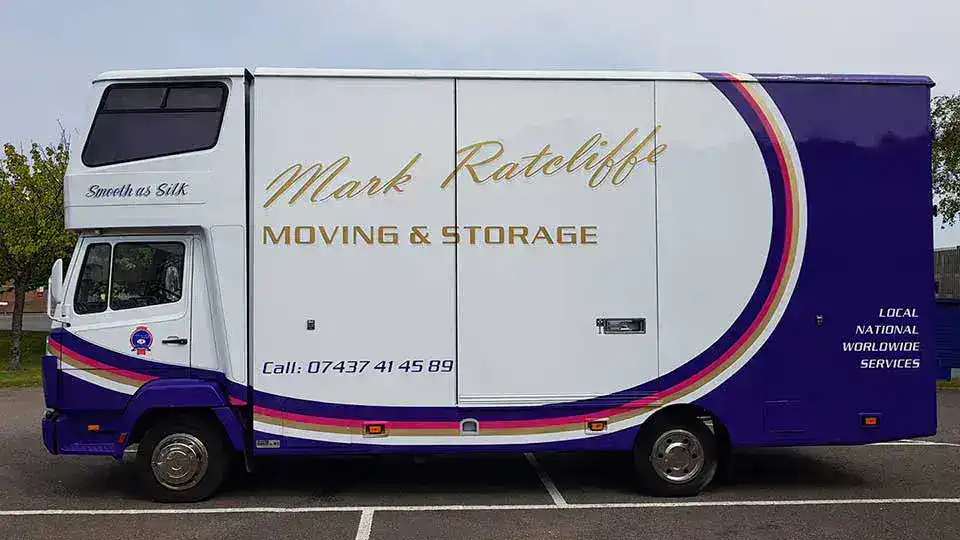
A weekend office move is the one decision that lets a business relocate without closing for a day of trading. The office shuts at normal Friday close, the crew comes through the door as the last person leaves, and the team walks into a working desk on Monday morning. Everything else — the crew shift pattern, the goods-lift slot, the after-hours passes, the order the IT gets plugged back in — exists to protect that Monday. This page is about how we run out-of-hours office relocations across Sussex, and what buying a weekend rather than a weekday actually changes on the invoice.
If you want the wider twelve-week project plan — lease dates, Openreach lead times, desk allocation, employee comms — that lives on our office relocation guide for minimal-disruption business moves. What follows here is the timing question on its own: which out-of-hours window to buy, who has to be in the building while you use it, and where a weekend move goes wrong when nobody books the lift.
The arithmetic is simple enough that most finance directors work it out in one meeting. A weekday office move costs you the working day of every person on the payroll, plus the day after, because nobody is productive sitting next to an unopened crate. A weekend office move costs you a higher line on the removal quote and nothing else. For a business where a day of billable time is worth more than the difference between a Tuesday crew and a Friday-night crew — which is most professional services firms, most agencies, most clinics — the weekend wins before you have finished the sums.
There is a second reason that has nothing to do with money. Weekday moves get interrupted. Someone needs a file out of a crate that has already gone on the lorry. A client turns up for an appointment nobody cancelled. A director decides mid-afternoon that the meeting-room table should go in a different room. Every interruption costs the crew time, and crew time is what you are buying. An empty building on a Saturday morning is the fastest working environment a removal crew ever gets, and the speed is real: the same inventory that takes two days with staff in the way goes out in one long shift when the floor is clear.
The third reason is the one nobody thinks about until it bites. Most commercial leases and most managing agents restrict when you may use the goods lift, the loading bay and the service corridor. In a serviced or multi-tenant building the restriction is often explicit: no bulk removals during core hours, because the passenger lifts belong to the other tenants. So the choice of a weekend office move is frequently not a choice at all — the building has already made it for you, and the only question left is which weekend and whether the slot is still free.
What a weekend does not buy you is a shortcut on preparation. The crate count, the labelling scheme, the desk plan and the IT map all have to be finished before Friday, because there is no Monday to tidy up in. Every weekend move that has gone badly in our experience went badly for the same reason: the office was not packed when the crew arrived, and the first four hours of an expensive out-of-hours shift were spent doing work that a member of staff could have done for free on Thursday afternoon.
Here is what a two-crew weekend office move looks like when it is running to plan. Friday, 17:00: the last member of staff leaves, the building manager or a nominated key-holder signs our crew in, and we walk the floor with the plan to confirm nothing has moved since the survey. 17:30 to 22:00: the first shift strips the floor — monitors and workstation kit boxed, crates sealed and labelled, chairs stacked, pedestals shrink-wrapped shut, and the first lorry load away. 22:00: hard stop on noisy work in most mixed-use buildings, which is why the loud dismantling — desk frames, partition screens, meeting tables — is scheduled first, not last.
Saturday, 07:00 to 18:00: the long shift. This is the day the bulk of the inventory moves, and it is deliberately the day with the fewest constraints — no other tenants competing for the lift, no core-hours restriction, no reception queue. Crews run in pairs, one loading at the old building and one placing at the new one, so the lorry never waits. Furniture is rebuilt as it lands rather than stacked in a corridor to be dealt with later, because a rebuilt desk on Saturday afternoon is an hour you do not spend on Sunday night.
Sunday, 08:00 to 16:00: the finishing shift. Everything that is left is small, fiddly and important. Crates are delivered to the desk that matches their label rather than dumped by floor. IT get the run of a quiet building to plug in, patch and test. Signage goes up. Rubbish, packaging and the shrink-wrap mountain leave the site. Sunday afternoon is when someone senior from your side should walk both buildings: the old one to check nothing has been left in a drawer, a loft cupboard or a server-room shelf, and the new one to sanity-check the desk plan before anyone arrives to sit at it.
The reason we start Friday evening rather than Saturday morning is buffer. If the lift is out of service, if the lorry gets stuck behind a delivery, if the new building’s floor protection has not been laid, you find out on Friday night with two full days in hand instead of on Sunday afternoon with none. The Monday opening is the deadline, not the plan; the plan finishes on Sunday teatime.
Not every out-of-hours office relocation needs the full weekend. A single-floor office of a dozen people can genuinely go Friday evening and be trading from the new address by nine on Monday, with Saturday untouched. A hundred desks over three floors is a weekend minimum, and a bank-holiday weekend is worth asking for if the calendar allows it, because the fourth day removes the need to rush the testing. Anything above that tends to get split: half the business one weekend, half the next, with a temporary network link between the two sites in the middle week.
The single most common cause of a weekend office move overrunning is not the volume of furniture. It is the lift. In a multi-tenant building the goods lift is a shared resource with a booking sheet, and out-of-hours use usually requires a written request to the managing agent, a named contact on site, and in many buildings a small charge for the engineer or porter who has to be available. Weekend slots are finite. If you sign a lease in March for an August move, ask the agent for the lift booking in the same week you sign, not in July.
Ask for these things in writing before the survey, because they change the crew size we quote. How many goods lifts serve the floor, and what are their internal dimensions and weight limits? Is there a lift that takes a two-metre desk frame upright, or does everything have to be stripped to components? What are the permitted out-of-hours working times, and is there a noise curfew? Is the loading bay height-restricted — a lot of city-centre bays cap at around two metres, which rules out a full-size Luton and means a shuttle from a smaller van. Is there a bay booking system, and can we hold it for the whole weekend rather than in two-hour blocks?
Floor protection is the second item on the same list. Almost every managing agent requires corridors, lift cars and lobby floors to be protected before a removal starts, and almost every one of them expects the removal company to supply it. We bring lift-car blankets, door-frame guards and floor runners as standard, but the agent may specify a particular product or want to inspect it before work begins — another reason for a Friday-evening start rather than a Saturday one.
At the receiving end the questions are the same but the answers are usually worse, because a new building has not learned your name yet. Confirm who unlocks it on a Saturday, whether the alarm system will accept an engineer’s code out of hours, whether the car park barrier works at weekends, and whether anyone has told the security desk that a removal lorry is expected. We have sat outside new offices at seven on a Saturday morning waiting for a key-holder who thought someone else was coming. It costs an hour of a crew that is already on an out-of-hours rate, and it is entirely avoidable with one email on Thursday.
An empty building at nine on a Saturday night is a different security proposition from a staffed office on a Tuesday, and every landlord knows it. Expect to be asked for a crew list before the weekend: full names, sometimes vehicle registrations, occasionally photo ID checked at the desk. We supply that as a matter of course. Our crews are directly employed and uniformed rather than agency labour hired by the day, which is precisely the answer a security manager wants when they ask who is going to be alone in the building overnight with the server room open.
Decide early who holds the keys and who is the responsible person on site. Somebody from your business should be present at the start of each shift and at the end of each shift, even if they go home in between. That person signs the crew in, gives the alarm code or disarms the system themselves, walks the final check at the end of the day, and sets the alarm behind us. If your building uses proximity fobs, ask for temporary out-of-hours fobs to be issued in the crew names — handing round one director’s personal fob works until the moment it does not, and access logs that all read as the same person are worthless if anything goes missing.
Some categories need their own chain of custody rather than a general crew pass. Petty cash, company cheque books, HR files, patient or client records, unencrypted backup drives, and anything covered by a data-protection obligation should be moved by a named member of your staff in a car, not on the lorry, and signed for at both ends. It is not that we cannot carry them — it is that a weekend move has more people, more doors propped open and more van doors ajar than a normal day, and the cleanest audit trail is the one where sensitive material never enters the general flow at all.
Finally, agree what happens to the old building once the last load leaves. Who locks it, who sets the alarm, who returns the fobs, and when does the landlord want the keys? On a weekend move the answer is often “Monday morning”, which means the empty office sits unattended for a night with your name still on the lease and, quite possibly, an insurance policy that assumes it is occupied. Tell your insurer the move dates. It takes one phone call and it closes a genuine gap.
On a weekend move the IT does not go back in the order it came out. It goes back in dependency order, from the wall outwards, and getting that sequence wrong is the difference between a Monday that works and a Monday spent apologising. The order that works: circuit first, then core network, then servers or the on-site kit that everything authenticates against, then printers and phones, then workstations, then the meeting rooms.
The circuit is the item you cannot rush on the day, which is why it is the one thing that must be finished before the weekend starts. The line into the new building — leased line, fibre, whatever your provider calls it — should be live, tested and carrying traffic days before the crew arrives, not ordered for the Monday. Openreach engineer appointments routinely run weeks out in East Sussex, and no amount of weekend planning compresses that. If the circuit will not be ready, that is a reason to move the move, not a reason to hope.
Core network next: switches, firewall, wireless controllers and access points, patched into a panel that somebody has already labelled. Then whatever your business authenticates against, whether that is a physical server in a cupboard or simply the connection to a hosted platform. It is worth moving the core kit ahead of everything else — often on the Thursday or Friday evening rather than with the main load — so IT have a full day to prove the network is up before a single workstation lands on a desk. Nothing wastes a Saturday like plugging in eighty machines to discover the wireless controller never came back.
Workstations come last and they come with the crate. Every machine, dock, monitor arm and cable bundle should carry the same label as the desk it is going to, so the crew places it and IT plug it in without a conversation. That labelling is done during packing, not on arrival — our guide to packing electronics safely covers the technique we use for screens, docks and cable looms, and it applies to a hundred workstations exactly as it does to a home office. We move the physical hardware; your IT team or IT contractor handles configuration, patching and testing, and we schedule the placement around when they can be on site.
Build a test list before the weekend and work through it on Sunday, not Monday. Can a laptop join the wireless? Does a desk phone or softphone ring in and out? Does the multifunction printer scan to email as well as print? Does the door-entry system work, does the meeting-room screen accept a connection, does the post-room label printer come up? Ten minutes with a checklist on Sunday afternoon finds the three things that would otherwise be found by thirty people at nine on Monday, all at once, all raising tickets.
A weekend office move costs more than the same job on a Wednesday, and it is worth understanding exactly which lines go up so the quote makes sense when it lands. The first is labour. Crews working Friday evening, Saturday and Sunday are on out-of-hours and weekend rates, and a compressed schedule usually means more of them working at once rather than the same crew working longer. Two teams shuttling between buildings finish in a weekend; one team would not, so the weekend price often reflects headcount as much as hourly rate.
The second is vehicles. A weekday move can run one lorry back and forth over two or three days. A weekend move usually needs enough vehicle capacity on site simultaneously to keep both ends busy, and if the loading bay is height-restricted you are paying for shuttle vans on top of the main lorry. The third is the building itself: managing agents commonly charge for out-of-hours security cover, porterage or engineer attendance on the goods lift, and those charges land on your account rather than ours. Ask the agent for the figure early — it is a real part of the weekend decision and it is the one most businesses forget to budget for.
Set against that, weekend moves quietly remove costs that weekday moves generate. There is no half-day of paid-for standing time while a crew waits for a meeting to finish in the room they need to clear. There is no second visit to collect the things that could not be moved during core hours. There is no queue for a passenger lift shared with four other tenants. Crews on an empty floor simply work faster, so the total hours on the invoice are lower than the same inventory moved around a working office, which offsets part of the premium rate.
Office moves are priced by floor area and inventory rather than by bedrooms, so the honest answer to “what will our weekend cost?” only arrives after a survey. The surveyor walks both buildings, counts desks, pedestals, storage units, screens and meeting furniture by type, measures the access at both ends, checks the lift and bay dimensions, and asks the access questions above so nothing on the day is a surprise. The written quote follows within 48 hours, itemised by phase — packing, transit, unloading and setup — so you can see what the weekend premium is actually attached to. Book the survey as soon as the lease dates are firm; weekend slots in the busy months go first.
One more piece of arithmetic worth doing honestly. Compare the weekend quote not with the weekday quote but with a day of your business being shut, and add the second day that people lose finding their things. For a small team that comparison sometimes favours the weekday move, and we will tell you so. For anything above about fifteen desks, or any business that cannot tell clients it is closed on a Tuesday, the weekend has usually already won.
We are a family-run Sussex remover and a full member of the British Association of Removers, audited annually. Crews are directly employed and trained at our own staff training centre — which matters more on a weekend job than on any other, because the people alone in your building at midnight are our people, on our payroll, with their names on the security list.
120+ independent Google reviews at 4.9/5. Survey, written quote within 48 hours, deposit protected by the BAR Advance Payment Guarantee, and a crew that turns up when the building says it may. Whichever category your move falls into — routine local, overseas, antiques, an office over a bank-holiday weekend — the approach is the same.
Booking the survey takes ten minutes via the online form.
Where the new premises are not ready on the day the old lease ends, business storage bridges the gap with stock and records retrievable on notice.
Free on-site or video survey, written fixed-price quote, BAR-protected deposit. Sussex’s family-run independent remover.
“Weekend” is the usual answer but it is not the only one, and for some businesses it is the wrong one. The single evening move suits a small office on one floor with no server room: close at five, load from five-thirty, unload and rebuild through the evening, open at the new address the next morning. It is the cheapest out-of-hours option because it is one shift, and it only works if the packing is genuinely finished before the crew arrives.
The staged evening move spreads the same job across a working week — a department a night, Monday to Thursday, with each team going home from the old building and arriving at the new one. It keeps the business trading throughout and it suits firms who cannot afford to be dark at all, but it costs more in total crew hours and it needs a temporary link between the two sites while both are half-occupied. The bank-holiday weekend is the opposite move: four days instead of three, used for the biggest jobs, where the extra day is spent testing rather than lifting.
Some contents do not fit any of those windows and travel separately. Server racks carry serious weight and need pre-disconnection by your IT team and lifting gear for the taller cabinets. Commercial safes are a job of their own; the guide to moving pianos and safes covers the method and the heavy and awkward items guide covers stair and doorway constraints that also apply to plan chests, plotters and full-height storage walls. For secure document holding — legal firms, accountants, healthcare records — we coordinate with specialist secure-document carriers where the obligation calls for it.
Weekend moves also tend to produce a surplus, because a new floor plan is almost never a like-for-like copy of the old one. Desks, pedestals and storage that do not fit the new layout can go straight from the old building to our Lower Dicker storage depot on the Saturday rather than cluttering the new office until someone decides. Commercial storage works like the residential version: climate-stable steel storage rooms at Lower Dicker for anything going away for months, or crate storage at our Croydon (CR0 4AA) and Crawley (RH10 9SP) stores, with access booked by appointment during depot hours. If instead you need to walk in and get at archived files and sample stock yourself during the week, a self-storage site suits that pattern better — the guide to choosing the right storage format covers which format suits which pattern of access.
For multi-site businesses, or a phased relocation running over several weekends, the survey conversation is longer than for a single out-of-hours job. Talk to us at survey early — ideally before the new lease is signed — and we will help structure the timeline around the access hours the building will actually grant you.
Booking a weekend move follows the same five steps as any other job, with one extra question at every stage: what does the building allow. One: enquire via the online quote form or call the office on 01323 848 008, and say up front which weekend you are aiming at. Out-of-hours slots are the constrained resource, not the lorry. Two: the survey. For an office this is on site rather than by video, and it covers both buildings — inventory by type, lift and bay dimensions, floor protection requirements, permitted working hours and the noise curfew.
Three: the written quote, emailed within 48 hours of the survey and itemised by phase so the weekend element is visible rather than buried in a single number. Four: deposit and date confirmation. Typically 25% of the quoted price on confirmation, fully protected under the British Association of Removers’ Advance Payment Guarantee, with the balance due on completion. Domestic and commercial removals within the UK are VATable, so the quote shows the figure both ways. Five: the move itself. Uniformed, directly employed crew, our own lorries, no agency labour, blankets washed between jobs.
Between steps four and five there is a piece of work that belongs to you rather than to us, and it is the one that decides how the weekend goes: get the lift booked, the passes issued, the key-holders named, the circuit live and the desk plan finished. Our office is reachable Monday to Friday 8am to 5:30pm and Saturday 9am to 1pm, or by email at office@markratcliffemoving.co.uk. We would rather have the awkward access conversation three weeks out than at seven on a Saturday morning. For the wider background on the company, the about us page covers who we are and how we work.
Whichever shape your relocation takes — a single evening for a dozen desks, a full Friday-to-Sunday for a floor, a staged move across two bank holidays — the principles hold: survey both ends, written itemised quote, deposit-protected booking, a crew who have done it before, and a Monday morning where the only thing anyone notices is the view from the new window.
Yes — that is exactly what the weekend window is for. You trade normally on Friday, we work Friday evening to Sunday, and you trade normally again on Monday. The business is never shut on a working day. The trade-off is that everything has to be packed and labelled before Friday close, because there is no weekday afterwards to catch up in.
Almost always. Multi-tenant and serviced buildings restrict out-of-hours working, goods-lift use and loading-bay access, and most managing agents want a written request, a named responsible person and a crew list in advance. Ask for the weekend slot as soon as your dates are firm — the lift booking is usually harder to get than the removal date.
Someone from your business at the start and end of each shift, to sign the crew in, handle the alarm and walk the final check. In between, our crew can work unaccompanied if the building permits it. Every crew member is directly employed and uniformed, and we supply names in advance for the security desk or the pass system.
From the wall outwards: the circuit into the building first and live before the weekend starts, then core network and switches, then servers or on-site kit, then printers and phones, then workstations, then meeting rooms. Test on Sunday against a written list rather than letting the whole team find the faults at nine on Monday.
The labour and vehicle lines go up because crews are on out-of-hours rates and more of them work at once, and the building may charge you separately for weekend security or lift cover. Some of that is offset because an empty floor is far quicker to clear than an occupied one. The figure only becomes real after a survey of both buildings.
That is why we start Friday evening rather than Saturday morning. Beginning a shift early gives two clear days of buffer, so a broken lift or a late key-holder costs slack rather than the Monday opening. Sunday is deliberately scheduled as a finishing and testing day, not as the day the last lorry is still being loaded.